


Imagine This...
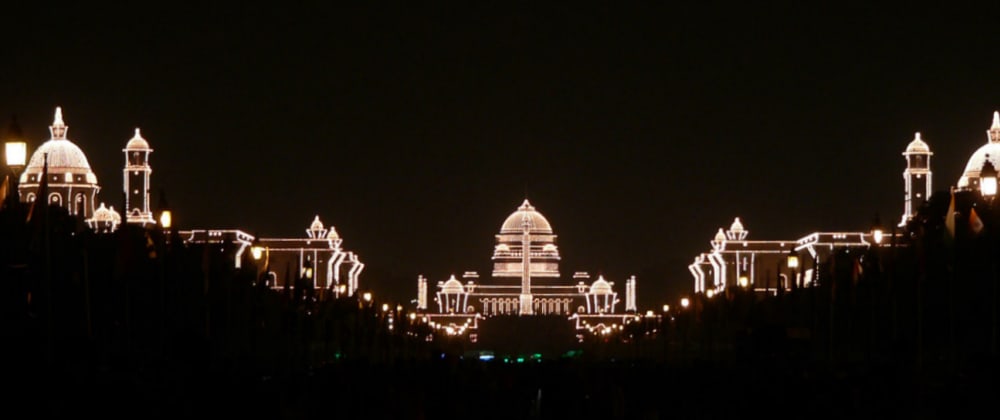
It's January 26, 1950. 10:18 AM. The Durbar Hall, Government House (now Rashtrapati Bhavan), New Delhi.
Dr. Rajendra Prasad takes the oath of office as the first President of the Republic of India. He reads from the Constitution:
"I, Rajendra Prasad, do swear in the name of God that I will faithfully execute the office of President of India and will to the best of my ability preserve, protect, and defend the Constitution and the law."
A 31-gun salute thunders across Delhi. The Union Jack is gone. The tricolor — saffron, white, and green with the Ashoka Chakra — flies over a republic.
Not a British Dominion. Not a colony with a new name. A sovereign, democratic republic governed by its own Constitution, written by its own people.
Outside, the first Republic Day parade marches down Rajpath (now Kartavya Path). Military bands. Floats from every state. Thousands of spectators.
The date is not accidental. On January 26, 1930, India declared Purna Swaraj — complete independence. The Congress had asked every Indian to observe it as Independence Day. Twenty years later, to the day, the declaration becomes law.
We have pledged to establish a sovereign democratic republic wherein all the citizens shall be assured justice, liberty, equality, and fraternity. We shall strive to fulfil the pledge we have made.
What Changed on January 26, 1950?
BEFORE JANUARY 26, 1950:

  India was technically a DOMINION:
  → Independent (August 15, 1947)
  → But still under the British Crown
  → King George VI was still "Head of State"
  → India governed by the modified
    Government of India Act, 1935
  → Governor-General (Chakravarti Rajagopalachari
    was the last)

AFTER JANUARY 26, 1950:

  India became a REPUBLIC:
  → Own Constitution — supreme law
  → Own President — elected, not hereditary
  → No connection to the British Crown
  → Universal adult suffrage —
    EVERY citizen over 21 gets a vote
    (lowered to 18 in 1989)
  → Fundamental Rights enforceable by courts
  → Independent judiciary
  → Federal structure

  FROM CROWN TO CONSTITUTION:
  The source of authority shifted from
  the British Parliament to
  "WE, THE PEOPLE OF INDIA."
The Circle — January 26, 1930 → 1950
THE TWENTY-YEAR ARC:

JANUARY 26, 1930:
  → Purna Swaraj DECLARED
  → Nehru unfurled the tricolor at Lahore
  → Millions took the independence pledge
  → The first "Independence Day"
  → A PROMISE: "We will be free."

JANUARY 26, 1950:
  → Republic proclaimed
  → Constitution comes into force
  → India becomes a sovereign republic
  → A FULFILMENT: "We ARE free."

  Same date. Twenty years apart.
  From declaration to reality.
  From defiance to governance.
  From a pledge taken in cold Lahore nights
  to a Constitution enforced in Delhi's halls.

  The choice of date was DELIBERATE —
  a message: India keeps its promises.
The First President — Dr. Rajendra Prasad
DR. RAJENDRA PRASAD:

Born: December 3, 1884, Bihar
Education: Calcutta University (gold medalist)
Career: Lawyer → freedom fighter → politician
Role: President of the Constituent Assembly
      → First President of India (1950-1962)
      — only President to serve two full terms

WHY HIM:
  → Senior Congress leader
  → Respected across party lines
  → Chaired the Constituent Assembly
  → Symbolized continuity: from freedom
    struggle to governance
  → Deeply religious but committed to
    a secular Constitution

THE PRESIDENCY:
  → Largely ceremonial (as the Constitution intended)
  → Set precedents for presidential conduct
  → Maintained dignity of the office
  → Rajendra Prasad represented the generation
    that fought for freedom and then GOVERNED it.
What India Looked Like on Day One
THE REPUBLIC — JANUARY 26, 1950:

POPULATION: ~360 million
LITERACY: ~18%
LIFE EXPECTANCY: ~32 years
GDP PER CAPITA: ~$60 (among the lowest in the world)
LANGUAGES: 800+ (14 in the Eighth Schedule)
RELIGIONS: Hindu, Muslim, Sikh, Christian,
  Buddhist, Jain, Parsi, and more
STATES: initially Part A, B, C, D states
  (later reorganized by language in 1956)

THE CHALLENGES:
  → 85% rural, mostly subsistence farming
  → Famine a living memory (1943)
  → 15 million partition refugees still resettling
  → Kashmir at war (ceasefire just one year old)
  → Princely states still being integrated
  → Communal tensions still simmering
  → No industrial base (the British took it)
  → No significant military-industrial capacity
  → Cold War beginning — which side to choose?

THE BET:
  Give UNIVERSAL SUFFRAGE to 360 million people
  — 85% illiterate
  — divided by caste, religion, language, region
  — with no democratic tradition
  — fresh from the trauma of partition

  Every "expert" said it would fail.
  India would collapse into dictatorship,
  military rule, or anarchy.

  They were wrong.
Why This Moment Matters
- The circle closed. January 26, 1930 — declaration. January 26, 1950 — fulfillment. The most meaningful date in Indian political history carries both the promise and its redemption.
- India chose democracy against all odds. 360 million people. 85% illiterate. No democratic tradition. Every comparable post-colonial nation chose military rule or one-party states. India chose elections, rights, and courts. And it worked.
- "We, the People" replaced "the Crown." The source of authority shifted from a foreign parliament to the people themselves. This was not just a legal change. It was a civilizational transformation — from subjects to citizens.
- The Constitution was untested. A document is just paper until it survives its first crisis. The first test would come with the first elections (1951-52) — could India actually conduct a democratic election for 173 million voters?
- Patel was dying. Sardar Patel — the man who built the republic by integrating 562 states — was gravely ill. He would die on December 15, 1950, less than 11 months after Republic Day. He lived just long enough to see the nation he built become a republic.
On January 26, 1950, a nation of 360 million people — many of whom had never heard of democracy — became the world's largest democratic republic. The Constitution they adopted was written by a Dalit. The first parade they watched celebrated an army that had never fought for India before. Everything was new. Everything was uncertain. And yet the bet they made that morning — that ordinary people could govern themselves — has held for 75 years.
Part of the Modern History series. This article covers the thirtieth event in the Complete Timeline Overview timeline.


Top comments (0)