


Imagine This...
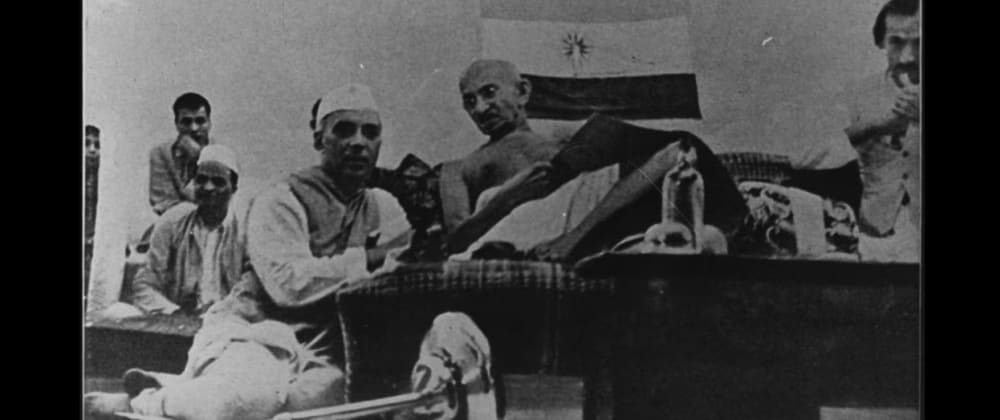
It's August 8, 1942. Gowalia Tank Maidan, Bombay. The All-India Congress Committee is in session. The air is thick with tension.
The world is at war. Japan has swept through Southeast Asia — Singapore has fallen, Burma is lost, the Japanese are at India's northeastern border. Britain is fighting for survival. And Gandhi has chosen this exact moment to launch the most ambitious challenge of his life.
He rises to speak. The crowd — tens of thousands — falls silent.
"Here is a mantra, a short one, that I give you. You may imprint it on your hearts and let every breath of yours give expression to it. The mantra is: 'Do or Die.' We shall either free India or die in the attempt."
Here is a mantra, a short one, that I give you. You may imprint it on your hearts and let every breath of yours give expression to it. The mantra is: 'Do or Die.' We shall either free India or die in the attempt. We shall not live to see the perpetuation of our slavery.
By 4 AM the next morning, Gandhi, Nehru, Patel, Azad, and virtually the entire Congress Working Committee are arrested. All of them. In one sweep.
The British expect this will kill the movement. Without leaders, what can the masses do?
They are wrong. The masses do everything.
Why August 1942? Why Now?
THE CONTEXT — WORLD WAR II AND INDIA:

1939    Britain declares India at war
        WITHOUT consulting Indian leaders
        Congress ministers resign
        |
1940    Lahore Resolution — Pakistan demanded
        |
1941    Japan enters the war
        Sweeps through Malaya, Singapore, Burma
        Japan is at India's DOORSTEP
        |
MARCH 1942 — CRIPPS MISSION:
        Churchill sends Sir Stafford Cripps to India
        Offer: Dominion Status AFTER the war
        + Right of provinces to opt out

        Gandhi calls it: "A POST-DATED CHEQUE
        on a CRASHING BANK."

        Congress rejects. League rejects.
        Everyone rejects.
        |
MID-1942:
        Japan bombing eastern India
        Burma refugees flooding in
        British preparing to "DENY" eastern India:
        → Destroy boats, rice stocks, infrastructure
        → So Japan can't use them
        → This will later cause the BENGAL FAMINE

        Indians see: the British can't even
        DEFEND India. Why are they still here?
        |
AUGUST 8, 1942 — QUIT INDIA RESOLUTION
  "The immediate ending of British rule in India
   is an urgent necessity."
The Resolution — What Congress Demanded
THE QUIT INDIA RESOLUTION (August 8, 1942):

DEMAND:
  "The British must QUIT India.
   Immediately. Unconditionally."

IF ACCEPTED:
  → India would form a provisional government
  → India would JOIN the war effort
    as a FREE NATION (not a colony)
  → India would cooperate with the Allies
    against fascism

IF REJECTED:
  → Mass civil disobedience
  → "Do or Die"

THE BRITISH RESPONSE:
  OPERATION ZERO HOUR:
  → Congress declared ILLEGAL
  → All leaders arrested by 4 AM, August 9
  → Gandhi imprisoned at Aga Khan Palace, Pune
  → Nehru at Ahmednagar Fort
  → Patel, Azad, Kripalani — all arrested
  → Congress offices raided and sealed
  → The British think it's OVER.

  It's just beginning.
The Underground Movement — India Without Leaders
This is what makes Quit India unique: it was a leaderless revolution.
THE MOVEMENT WITHOUT LEADERS (Aug 1942 - 1944):

WITH NO INSTRUCTIONS FROM GANDHI:
  India erupted on its own.

PHASE 1 — URBAN PROTESTS (August 9-15):
  → Strikes in Bombay, Calcutta, Delhi, Madras
  → Students walk out of every college
  → Factory workers strike
  → Aruna Asaf Ali hoists the Congress flag
    at Gowalia Tank on August 9
    (she becomes the face of the movement)

PHASE 2 — RURAL UPRISING (August-December):
  → Railway lines sabotaged (in 300+ places)
  → Telegraph lines cut
  → Post offices attacked
  → Police stations burned
  → Government buildings occupied

PHASE 3 — PARALLEL GOVERNMENTS:
  The most remarkable phase:
  → SATARA (Maharashtra) — "Prati Sarkar"
    (Parallel Government) — functioned for 2+ years
    Its own courts, tax system, policing
  → MIDNAPORE (Bengal) — Tamluk National Government
    Ran administration, relief work
  → BALLIA (UP) — Briefly took over the district
    Released prisoners from jail

UNDERGROUND LEADERS:
  → Jayaprakash Narayan (JP) — escaped from
    Hazaribagh Jail, organized underground network
  → Ram Manohar Lohia — ran underground radio
  → Aruna Asaf Ali — coordinated from hiding
  → Usha Mehta — ran "Congress Radio" (secret)
    from Bombay — broadcast until discovered

SCALE:
  100,000+ arrested
  1,000+ killed in police/military firing
  Martial law in many districts
  RAF planes used to strafe protesters
  — the British used AIR POWER against
    unarmed Indian civilians
Freedom is not given — it is taken. When our leaders were arrested, the people became the leaders.
The Key Figures
ARUNA ASAF ALI — The Grand Old Lady of Independence
THE WOMAN WHO RAISED THE FLAG:

August 9, 1942 — the day after Gandhi's arrest
Gowalia Tank Maidan, Bombay
Police cordon everywhere. Leaders arrested.

Aruna Asaf Ali — 33 years old —
walks through the police lines
and HOISTS THE CONGRESS FLAG.

She goes underground.
For 4 YEARS, she evades arrest.
Coordinates resistance from hiding.
The British put a BOUNTY on her head.

She never surrendered.
She was never caught.
JAYAPRAKASH NARAYAN — The Escape Artist
JP — THE MAN WHO ESCAPED:

Arrested and sent to Hazaribagh Central Jail.
In November 1942, he ESCAPES — scales the wall
with bedsheets during a storm.

Goes underground.
Organizes the resistance network across
Bihar, UP, and Maharashtra.

Later (1974), he would lead another revolution
— the Total Revolution against Indira Gandhi.
JP's entire political life was defined by Quit India.
The British Response — Maximum Force
OPERATION CRUSH:

MILITARY DEPLOYMENT:
  → 57 battalions deployed against civilians
  → Machine guns used on crowds
  → RAF planes strafe villages in Bihar and Bengal
  → Naval units patrol coastal areas

REPRESSION:
  → 100,000+ arrested
  → 1,000+ killed (official; actual higher)
  → Congress banned, property confiscated
  → Press censored — TOTAL blackout
  → Villages collectively fined
  → Public flogging of protesters
  → Homes burned in Bihar and Eastern UP

GANDHI IN PRISON:
  → Held at Aga Khan Palace, Pune
  → His wife Kasturba dies in prison (Feb 22, 1944)
  → His secretary Mahadev Desai dies (Aug 15, 1942)
    — just 6 days into imprisonment
  → Gandhi's own health deteriorates
  → Released May 6, 1944 (health grounds)

THE COST:
  The British held India by FORCE.
  Not by consent. Not by legitimacy.
  By bayonets and bombing runs.

  The pretense of benevolent governance was dead.
The Muslim League — Sitting It Out
WHO DIDN'T JOIN QUIT INDIA:

THE MUSLIM LEAGUE:
  → Jinnah ordered League members to stay OUT
  → While Congress leaders sat in jail (1942-45),
    the League ORGANIZED
  → Built grassroots support across Muslim India
  → Cooperated with the British war effort
  → In return: British goodwill + political space

THE COMMUNIST PARTY OF INDIA (CPI):
  → Initially called the war "imperialist"
  → After Russia joined the Allies (1941),
    CPI reversed: "People's War"
  → Supported the British war effort
  → OPPOSED Quit India
  → This cost CPI credibility for decades

THE HINDU MAHASABHA:
  → V.D. Savarkar: cooperate with the British
    to build military strength
  → Did not join Quit India

THE CONSEQUENCE:
  When Congress emerged from prison in 1945,
  the Muslim League had transformed:
  → 1937: Won 109 of 482 Muslim seats
  → 1945-46: Won 87% of ALL Muslim seats

  Three years in jail cost Congress
  the chance to stop partition.
Why This Moment Matters
- It was India's final mass movement. After Quit India, there were no more Gandhian movements. The next phase was negotiation, election, and ultimately partition. This was the last time India rose as one against the British.
- It proved India was ungovernable. The British held India only by deploying 57 battalions, aerial strafing, and mass arrest. A colony held by bayonets is no longer a colony — it's an occupation. The British knew it.
- Leaderless revolution worked. Every leader in jail. The movement survived — even thrived. Parallel governments, underground radio, railway sabotage. This proved the struggle had moved beyond any single leader.
- It cost Congress the Muslim question. Three years in prison while the League organized freely. By 1945, Pakistan had a mandate. The price of Quit India was partition.
- Women led from the front. Aruna Asaf Ali, Usha Mehta, Sucheta Kripalani — women ran the underground movement. This was the most significant female leadership in the freedom struggle.
Gandhi said "Do or Die." India chose both — and the empire learned that you can jail the leaders, but you cannot jail a nation.
Part of the Modern History series. This article covers the twenty-second event in the Complete Timeline Overview timeline.


Top comments (0)